


Since 2012 – Quality Wholesale Parts, Nationwide! Connect With Us Now
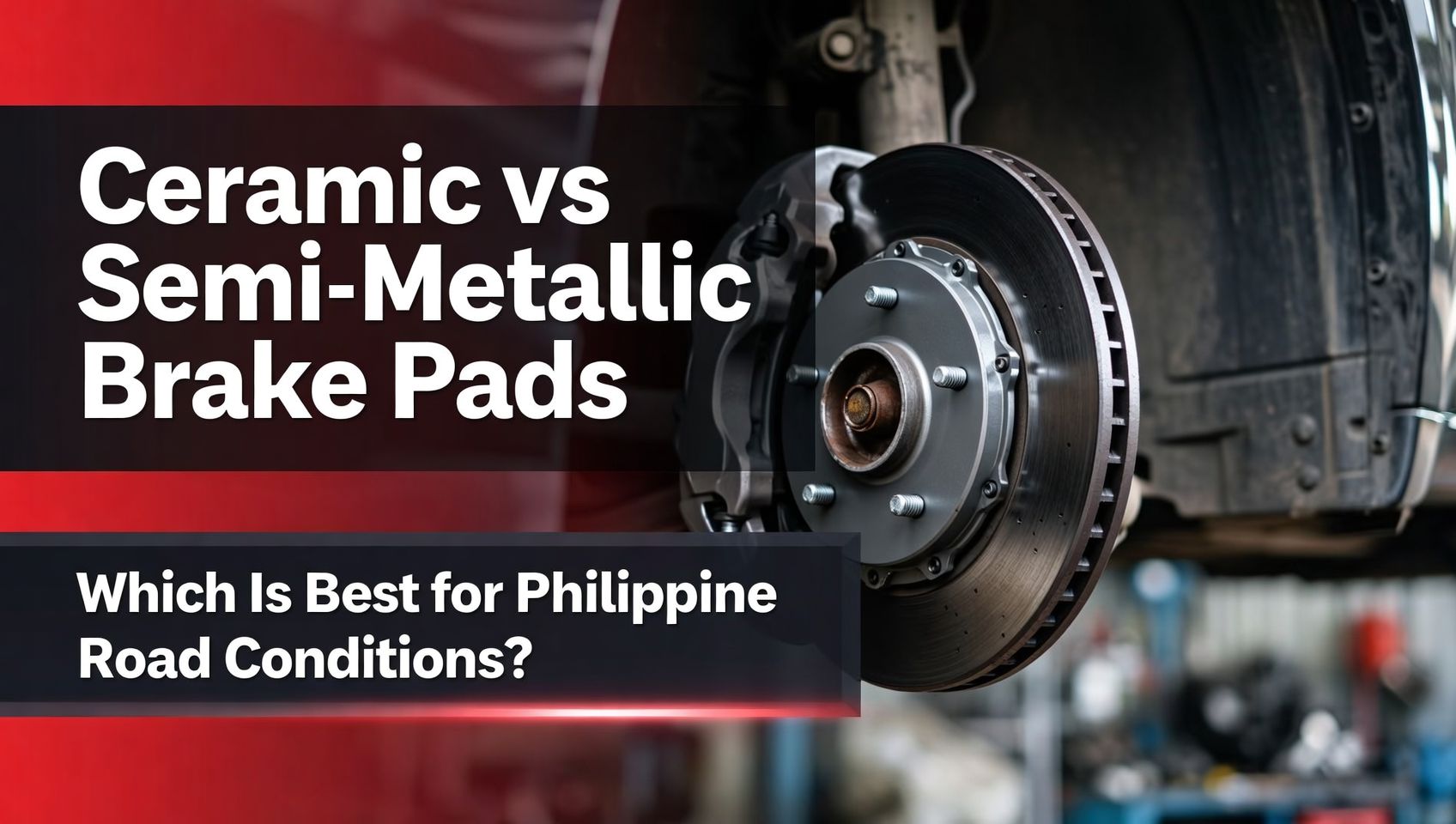
Choosing the right brake pads isn’t just about price—it’s about how you drive, where you drive, and what kind of performance you expect. For Philippine roads, where traffic, heat, rain, and mixed driving conditions are everyday realities, the debate often comes down to ceramic brake pads vs semi-metallic brake pads.
If you’re researching ceramic brake pads, this guide will help you clearly understand how they compare to semi-metallic options—and which one fits your driving style best.
Before choosing, it’s important to know how each brake pad type works and what they’re designed for.
Ceramic brake pads are made from ceramic fibers mixed with bonding materials and small amounts of metal.
Key characteristics:
These are commonly chosen for daily drivers, sedans, crossovers, and city vehicles.
Semi-metallic brake pads contain 30–65% metal (steel, iron, copper) blended with organic materials.
Key characteristics:
They’re often preferred for performance driving, heavy loads, or demanding road conditions.
| Feature | Ceramic Brake Pads | Semi-Metallic Brake Pads |
|---|---|---|
| Noise Level | Very quiet | Moderate to loud |
| Brake Dust | Low | High |
| Stopping Power | Smooth, consistent | Strong, aggressive |
| Heat Resistance | Moderate | High |
| Rotor Wear | Minimal | Higher |
| Lifespan | Long | Medium |
| Cost | Higher | Lower |
Ceramic brake pads are ideal if you:
For most Philippine drivers dealing with congestion, frequent braking, and urban roads, ceramic brake pads offer comfort and convenience.
Semi-metallic brake pads are better if you:
If durability and stopping power matter more than noise and dust, semi-metallic pads are a strong choice.
For budget-conscious drivers who don’t mind extra maintenance, semi-metallic pads can still be practical.
There’s no one-size-fits-all answer.
For most urban Philippine drivers, ceramic brake pads are the better everyday option.
Yes. Ceramic brake pads are excellent for city driving due to their quiet operation, smooth braking, and low dust.
Generally, yes. Ceramic brake pads tend to wear more slowly under normal driving conditions.
Yes. Semi-metallic brake pads handle heavy loads and high heat better, making them ideal for trucks and vans.
Yes. They perform well in normal Philippine driving conditions, though extreme downhill or heavy-load use favors semi-metallic pads.
For daily drivers, yes. Lower noise, less dust, longer lifespan, and reduced rotor wear make them cost-effective long term.
Since 2012, KG Car PH has been the go-to for affordable car parts in the Philippines. We make it easy to find the right fit and offer same-day delivery nationwide—so you get quality parts fast, without spending more.
SOCIAL MEDIA
TOP CATEGORIES
QUICK LINKS
HELP
support@kgcar.ph
© 2025 KGCAR.PH