


Since 2012 – Quality Wholesale Parts, Nationwide! Connect With Us Now
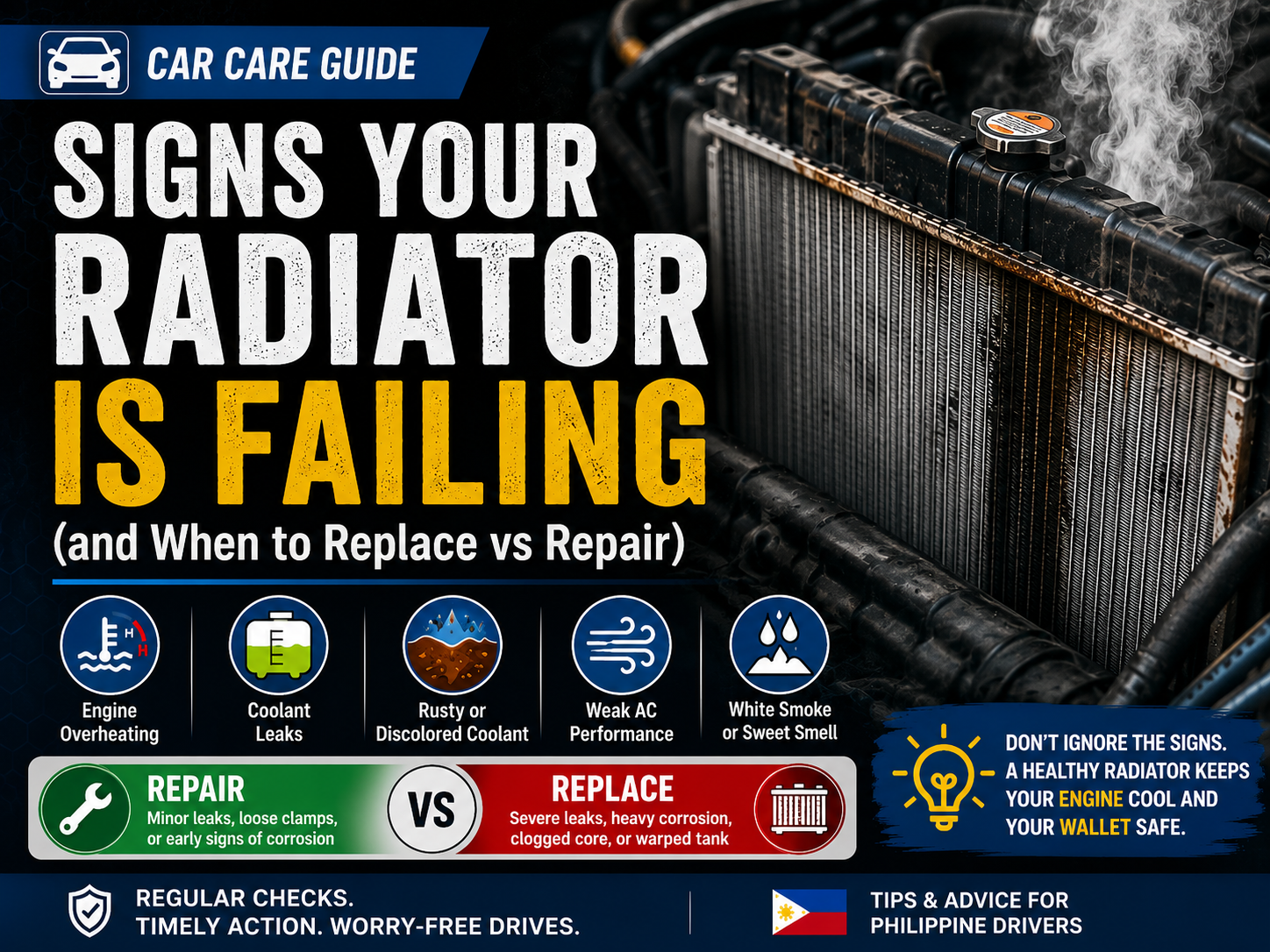
In the Philippines’ hot and humid climate, your vehicle’s radiator works overtime to prevent engine overheating. With daily traffic jams in EDSA, C5, and other major highways, plus frequent exposure to flooded roads during typhoon season, your radiator faces constant stress. Recognizing the early signs of radiator failure can save you from costly engine repairs and unexpected breakdowns on EDSA or NLEX. Trust KG CAR PH for reliable automotive advice.
For quality radiators and cooling system parts, browse our radiator selection.
Being aware of these warning signs can help you address radiator issues before they lead to complete failure or engine damage:
Not all radiator problems require a full replacement. Understanding when repair is sufficient versus when replacement is necessary can save you money while ensuring your vehicle’s reliability.
These issues can often be repaired without replacing the entire radiator:
These conditions typically require radiator replacement:
Our unique driving conditions require special attention to cooling system maintenance:
| Service Type | Average Cost (PHP) | Time Required | Best For |
|---|---|---|---|
| Radiator flush & refill | 1,500 – 3,000 | 1-2 hours | Preventive maintenance, minor cooling issues |
| Minor leak repair (epoxy/soldering) | 2,000 – 5,000 | 2-4 hours | Small pinhole leaks, seam repairs |
| Hose & clamp replacement | 800 – 2,000 | 30-60 minutes | Leaking hoses, deteriorated clamps |
| Radiator replacement (local brand) | 4,000 – 8,000 | 2-4 hours | Moderate damage, older vehicles |
| Radiator replacement (OEM/imported) | 8,000 – 15,000+ | 2-4 hours | Newer vehicles, severe damage, performance cars |
Knowing your vehicle’s specifications helps ensure proper replacement parts:
While some maintenance can be DIY, these situations require professional attention:
Your radiator is a critical component that protects your engine from Philippines’ challenging driving conditions. By recognizing early warning signs, understanding when repair versus replacement is appropriate, and following preventative maintenance tailored to our local climate, you can extend your vehicle’s life and avoid costly breakdowns. Remember that prevention through regular checks is always more affordable than emergency repairs.
Check coolant level at least weekly, or every 500 km driven. During hot summer months (March-May) or before long trips, check every 2-3 days. The extreme heat accelerates coolant evaporation and increases system pressure.
You can use clean water temporarily in an emergency, but it’s not recommended for regular use. Water boils at 100°C while proper coolant mix raises boiling point to 105-115°C, providing crucial protection in our tropical climate. Always replace with proper 50/50 coolant-water mix as soon as possible.
Stop-and-go traffic in cities like Manila, Cebu, and Davao significantly reduces radiator lifespan. Constant heating and cooling cycles cause thermal stress, while low-speed movement means less airflow through the radiator. Vehicles primarily used in urban traffic may need radiator inspection every 20,000-30,000 km versus 40,000-50,000 km for highway-driven vehicles.
Modern aluminum radiators are generally better suited for Philippine conditions. They’re lighter, resist corrosion better than brass/copper in humid environments, and dissipate heat more efficiently. However, proper maintenance is key regardless of material type – neglect will cause premature failure of any radiator.
Based on local mechanic estimates, approximately 60-70% of radiator failures in the Philippines are preventable with proper maintenance. The most common preventable issues are coolant neglect leading to corrosion, clogged fins from debris buildup, and hose deterioration from heat exposure.
Since 2012, KG Car PH has been the go-to for affordable car parts in the Philippines. We make it easy to find the right fit and offer same-day delivery nationwide—so you get quality parts fast, without spending more.
SOCIAL MEDIA
TOP CATEGORIES
QUICK LINKS
HELP
support@kgcar.ph
© 2026 KGCAR.PH
Since 2012, KG Car PH has been the go-to for affordable car parts in the Philippines. We make it easy to find the right fit and offer same-day delivery nationwide.
Enter your email or mobile so we can follow up with answers, quotes & deals.